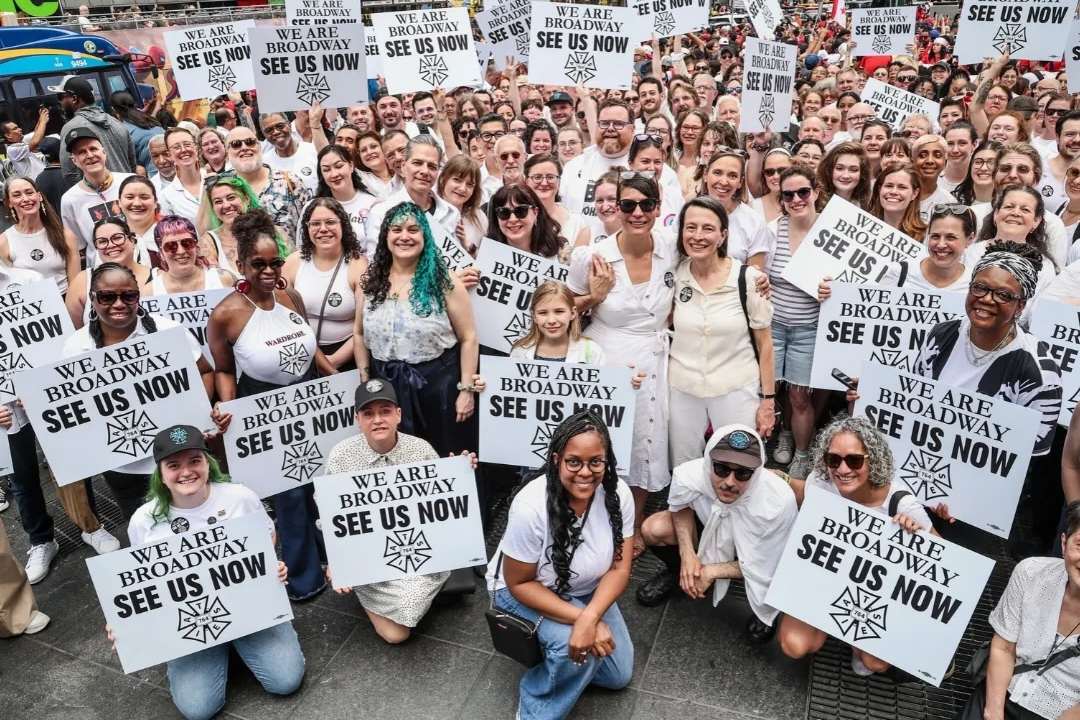
 The theatrical wardrobe workers of IATSE Local 764 will vote on Sunday, November 22, on whether to authorize a strike, nearly four months after their Broadway contract expired and days after the Broadway League called off two scheduled bargaining sessions.
The local announced the vote on Friday, November 20, in a statement posted on the IATSE's Instagram account. Its members are the people who dress the performers, run the quick changes and keep every costume in a production fit for eight shows a week. They have stayed on the job without a contract since July 26, after a negotiation with the League that began in June and has now run for close to six months.
According to the union, the League canceled the meetings set for Wednesday, November 18, and Thursday, November 19. Local 764 is asking the League and Broadway's producers to put new dates on the calendar immediately, and says it is ready to negotiate now. BroadwayWorld reports that the union wants the dispute settled before Thanksgiving.
Wages are the main sticking point, and with them a gap the union describes as long-standing. Wardrobe has historically been a mostly female department, paid at rates well below the stagehand classifications that men have mostly held. Recent contracts narrowed that difference without closing it: by the union's account, a Local 764 department head has to work nearly 45% longer than someone in a comparable department-head role to take home similar pay. The local says it will not sign an agreement that widens the gap or reverses the progress made toward pay equity.
A yes vote would not stop any performance on its own. It gives the union's leadership the authority to call a strike if talks break down, which is the leverage both sides will now be bargaining around. Local 764 is the second IATSE branch representing Broadway workers to seek that authority this season: the stagehands of IATSE Local One voted unanimously to authorize strike action at their October membership meeting, and IATSE International President Matthew D. Loeb has approved their authorization to strike if necessary.
The union's statement does not name any individual productions, and no response from the Broadway League had been published when this article was written.